Rocket Science Simplified

Raghu Yadav
| 03-04-2026
 · Science Team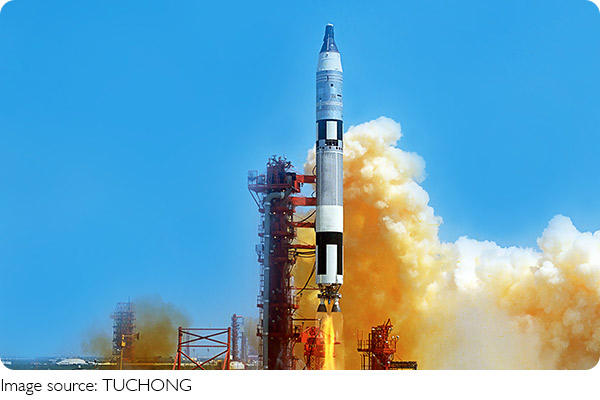
When we think of rockets, we often envision astronauts launching into space, powerful engines roaring as they escape Earth's atmosphere.
But behind the dramatic liftoff is a fascinating science that's rooted in simple principles—principles that anyone, even beginners, can understand.
Rocket propulsion is based on the same laws that govern everyday activities, but when these laws are applied to rockets, they allow humanity to venture far beyond the Earth. In this article, we'll break down the basic principles of rocket propulsion and make the science behind it easy to understand.
1. Newton's Third Law: The Foundation of Rocket Movement
The key to understanding rocket propulsion begins with one of Sir Isaac Newton's most famous laws: "For every action, there is an equal and opposite reaction."
• The Action: In a rocket, the engines burn fuel and expel gas downwards at high speeds. This is the "action" part of the law. The gas particles are forced out of the engine nozzle, creating immense pressure and propulsive force.
• The Reaction: According to Newton's law, for every action (the expulsion of gas), there is an equal and opposite reaction. This reaction pushes the rocket upwards, propelling it into the sky. Essentially, the rocket moves because the gas moves in the opposite direction, pushing the rocket forward.
This principle is similar to blowing up a balloon and letting it go—the air rushing out of the balloon causes it to shoot in the opposite direction. In a rocket, however, the scale and power are far greater, resulting in the force needed for space travel.
2. How Rocket Engines Work: From Fuel to Propulsive Force
The process that powers a rocket involves a series of carefully controlled chemical reactions inside the rocket engine. Here's how it works:
• Fuel Combustion: A rocket's engines use a combination of fuel and oxidizer, which burns to produce hot gases. These gases expand rapidly and are forced out of the nozzle, creating propulsive force. Rocket engines typically use liquid fuel (like liquid hydrogen and oxygen) or solid fuel, depending on the rocket's purpose and design.
• High-Speed Gas Expulsion: The key to producing enough propulsive force is forcing the gases out at incredibly high speeds. As the gases are expelled, they push against the walls of the rocket and escape through the nozzle. This high-speed expulsion of gases creates the necessary force to overcome Earth's gravity.
• No Need for Air: Unlike airplanes, which rely on air to generate lift through their wings, rockets don't need air. The lack of air pressure in space means that rockets can continue to push forward using the same propulsion methods in the vacuum of space.
3. The Role of the Rocket Nozzle: Directing the Propulsive Force
A key component of rocket propulsion is the nozzle—a specially designed opening at the back of the rocket engine. The nozzle serves two critical functions:
• Focusing the Gas: The nozzle's narrow opening helps to focus and direct the flow of gas in one direction. This is necessary to ensure that all the energy produced by the burning fuel is used to create propulsive force and propel the rocket upward.
• Expanding the Gas: The nozzle also allows the gas to expand rapidly, increasing the speed at which it leaves the engine. The faster the gas exits, the more propulsive force the rocket generates, helping it break free from Earth's gravity and reach space.
4. The Importance of Propulsive Force-to-Weight Ratio
To achieve lift-off, a rocket must generate more propulsive force than its weight. This is referred to as the propulsive force-to-weight ratio, and it's one of the most critical aspects of rocket design.
• Propulsive Force: The force produced by the rocket engines, pushing the rocket upwards.
• Weight: The mass of the rocket, including the fuel and payload, which works against the propulsive force.
The greater the propulsive force-to-weight ratio, the faster the rocket will accelerate and the more quickly it will reach the required speed to break free from Earth's gravitational pull. A high propulsive force-to-weight ratio ensures that the rocket doesn't get stuck or fall back to Earth.
5. The Staging of Rockets: Breaking Down the Journey
Rockets are often built in stages, each stage having its own set of engines and fuel. These stages are jettisoned as they run out of fuel, making the rocket lighter and allowing the remaining stages to accelerate more quickly.
• First Stage: The first stage provides the initial propulsive force to lift the rocket off the ground and through the lower atmosphere. It uses the most fuel and is jettisoned once it's exhausted.
• Second Stage: After the first stage is discarded, the second stage ignites to continue the rocket's journey into space. The lighter weight of the rocket, after shedding the first stage, allows this second stage to continue the ascent more efficiently.
• Final Stage: The final stage often carries the payload into orbit or on its way to its final destination (such as the Moon or Mars). Once the rocket reaches space, this stage may detach, and the payload is deployed.
6. Rocket Propulsion Beyond Earth: The Push Toward the Stars
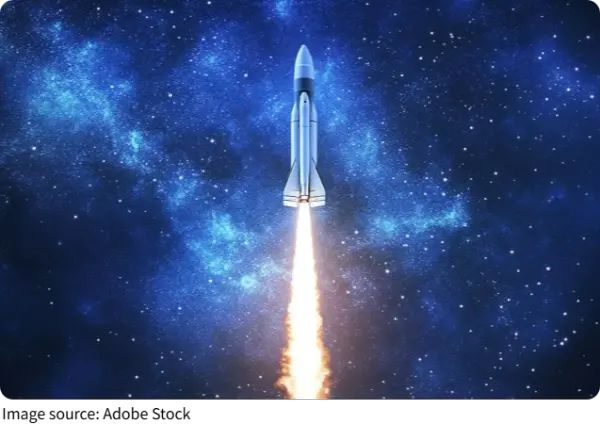
Once a rocket escapes Earth's atmosphere, its propulsion system continues to be the driving force behind interplanetary travel. However, as rockets travel farther, new methods of propulsion are being researched and developed.
• Ion Propulsion: For long-duration space travel, such as missions to Mars, traditional rocket propulsion becomes inefficient due to the vast distances involved. This is where ion propulsion comes in—using electrically charged ions to generate propulsive force. While slower, ion engines are more fuel-efficient over long periods, making them ideal for space exploration.
• Nuclear Propulsion: Future rocket propulsion technologies, like nuclear fusion or fission propulsion, could enable faster travel to distant planets. These technologies are still in their infancy, but they hold immense potential for cutting-edge space exploration.
Conclusion: The Beauty of Rocket Science
While rocket propulsion may seem complicated at first glance, it's grounded in basic physics and science principles that anyone can understand. From Newton's Third Law to the advanced technologies of modern space exploration, rockets are an incredible testament to human ingenuity. As we continue to explore new frontiers, it's clear that the science behind propulsion will remain the driving force behind our journeys into the unknown. Understanding the basics is the first step toward appreciating the monumental achievements of space travel—and who knows? Maybe one day, you'll find yourself aboard a rocket, exploring the stars!