Night Turns Wonder

Nolan O'Connor
| 01-05-2026
 · Art Team
Night scenes in anime-style art can feel magical because darkness gives every detail more emotional weight. A quiet road, glowing room, moonlit garden, or distant skyline can become a place of wonder when the lighting is carefully controlled. The night does not simply hide things. It reshapes them. Shadows soften edges, small lights become important, and color choices guide the mood with subtle force. When artists balance mystery with readability, nighttime turns ordinary spaces into scenes that feel calm, cinematic, and full of possibility.
Deep Blue
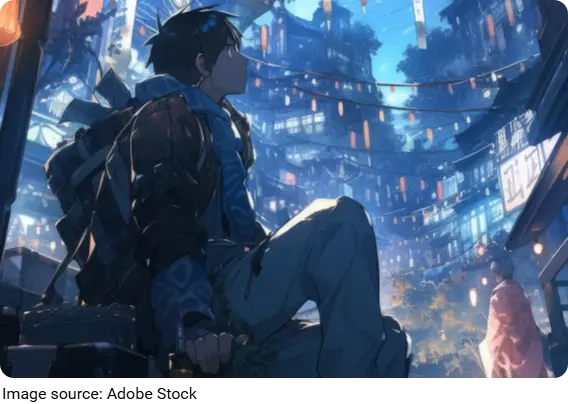
Many night illustrations lean on blue because it reads clearly as darkness without turning the whole frame into flat black. Blue also leaves room for detail, allowing buildings, trees, faces, and clouds to remain visible. A dark blue sky can feel peaceful, lonely, or mysterious depending on the surrounding light. This makes it especially useful for anime scenes, where mood often matters as much as action. The color gives the viewer a sense of night while still keeping the world visually open.
Guided Light
A single glow can organize an entire scene. A lamp, window, sign, moon, or distant doorway gives the eye a place to land. It also tells the viewer what matters emotionally. Warm light in a dark setting can suggest comfort, while cooler light can create distance or quiet tension. Anime artists often use this contrast to make night feel layered. The darkness creates mystery, and the light creates focus.
Shadow Shape
Shadows are not empty areas. They create structure, depth, and atmosphere. A long shadow across a path can make the space feel still, while soft shadows in a room can create privacy. At night, shapes often become simpler, which can strengthen the composition. The viewer notices silhouettes, outlines, and large value patterns before small details. This simplification helps night scenes feel elegant and dramatic without becoming visually crowded.
Quiet Air
Soundless atmosphere is one reason nighttime feels special in anime art. Empty streets, still rooms, and open skies invite the viewer to slow down. Even without actual sound, the visual design can suggest silence. Soft gradients, minimal movement, and gentle lighting make the scene feel suspended. That pause allows emotion to surface. A character standing under night light can seem thoughtful simply because the surrounding world has become quiet enough to notice them.
Warm Contrast
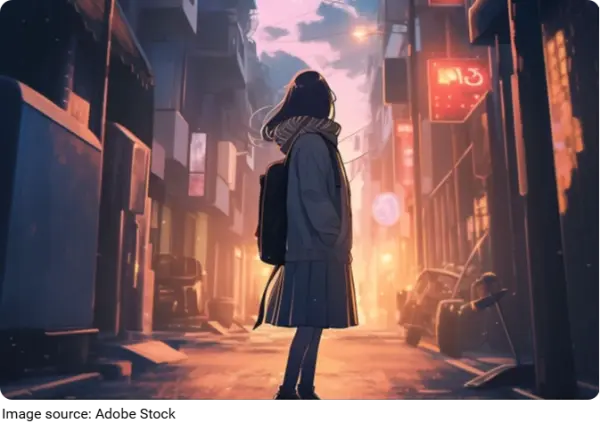
Small warm lights become powerful against cool darkness. A golden window, lantern, or shop sign can change the emotional direction of a scene. Instead of feeling cold or distant, the night becomes welcoming. This contrast also adds depth because warm tones seem closer while cool tones recede. Artists use that effect to guide attention through the frame. A scene can feel both spacious and intimate when warm light sits inside a larger blue environment.
Starry Distance
A night sky gives anime art a natural sense of scale. Stars, clouds, and moonlight can make a scene feel larger than the character standing beneath it. That distance creates wonder. The viewer senses that the world continues far beyond the immediate setting. A sky does not need to be crowded to be effective. A few carefully placed points of light can suggest openness, memory, and quiet imagination.
Character Scale
Night settings often make characters feel more emotionally exposed. A figure near a window or under a streetlight can look small against the surrounding darkness. That contrast helps communicate inner feeling. The viewer notices posture, gaze, and stillness more clearly. A simple pose can become meaningful because the environment gives it space. The night frames the character, turning small emotional cues into the center of attention.
Readable Mystery
Wonder depends on balance. If a night scene is too dark, the viewer loses connection. If it is too bright, the mood disappears. Strong anime-style night art keeps important shapes readable while leaving enough uncertainty to spark curiosity. The best scenes reveal just enough: a path, a face, a window, a glow in the distance. That partial visibility makes the setting feel alive with hidden possibility.
Conclusion:
Anime art turns night scenes into wonder by making darkness active rather than empty. Blue tones preserve atmosphere, light sources guide emotion, shadows create structure, and quiet space allows small details to matter. The night becomes a storytelling tool, not just a time of day. It can make a city feel alive, a room feel private, or a sky feel endless. The most memorable scenes know how much to reveal and how much to leave unseen. What makes a night scene feel most magical: the color, the glow, or the silence around it?