Black Line Secrets!

Amina Hassan
| 18-07-2026
 · Sport Team
Lykkers, have you ever held a basketball and wondered why it has those thick black lines wrapping around its surface? At first glance, they may seem like simple decorative details, but they are actually one of the most important design features ever introduced to the sport. Without them, dribbling, passing, and shooting would be noticeably more difficult.
Every professional and recreational basketball relies on these grooves to improve grip, control, and consistency. The next time you pick up a ball, those black lines might become the first thing you appreciate rather than overlook.
The Hidden Engineering Behind the Channels
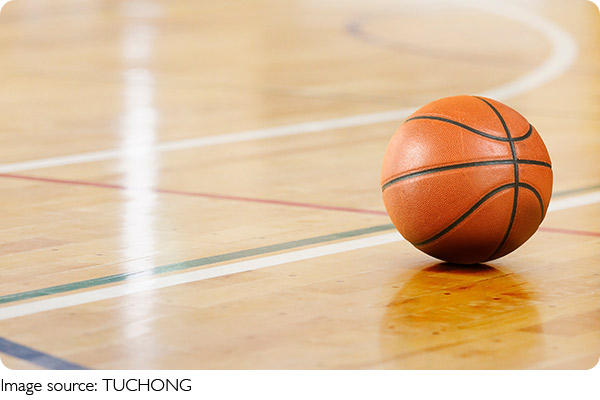
The black lines are not painted decorations. They are recessed channels, commonly called seams or grooves, formed where the basketball's outer panels are joined together during manufacturing. Modern basketballs are typically made from eight carefully shaped panels of leather, composite leather, or rubber. These panels are bonded around an inner carcass that contains the inflatable bladder responsible for maintaining air pressure.
The channels are intentionally made slightly deeper than the surrounding surface. This design creates natural reference points for the fingers, allowing players to quickly position their hands without needing to look directly at the ball. Whether catching a fast pass or preparing for a jump shot, the grooves help athletes instinctively establish a secure grip within fractions of a second.
Manufacturers also fill these channels with durable black material because darker colors conceal wear better than lighter ones. As a result, the grooves remain clearly visible throughout the basketball's lifespan while continuing to provide functional benefits.
Better Grip Means Better Ball Control
Grip is one of the biggest reasons these black channels exist. Basketball is played at high speed, where players constantly change direction, pass under pressure, and release shots within seconds. A perfectly smooth ball would easily slip from sweaty hands, especially during intense competition.
The recessed seams create friction by giving the fingertips small edges to press against. Combined with the textured pebble surface found on most basketballs, these grooves improve handling without requiring players to squeeze the ball harder. This reduces hand fatigue while increasing confidence during dribbling and passing.
Professional players often develop a subconscious preference for finger placement along specific seams. During free throws, many shooters align their fingertips with the grooves to reproduce identical hand positioning every time. Consistent hand placement contributes to repeatable shooting mechanics, an important factor in improving accuracy over thousands of practice repetitions.
Helping Players Read the Ball in Motion
The black channels also provide visual information. As the basketball spins through the air, the contrasting lines make its rotation easier to recognize. Players can instantly judge whether a pass has backspin, sidespin, or excessive rotation before catching it. This visual feedback benefits shooters as well. Coaches frequently teach players to generate smooth backspin because it softens the ball's interaction with the rim and backboard.
A Design That Evolved With the Sport
Basketballs did not always look the way they do today. Early versions used laced leather construction, similar to vintage footballs, which created uneven surfaces that affected both bounce and handling. As manufacturing technology improved during the twentieth century, companies introduced molded panel construction that eliminated external laces while retaining structured seams.
The familiar eight-panel configuration gradually became the industry standard because it balanced durability, manufacturing efficiency, and predictable performance. Organizations such as the NBA and FIBA now specify detailed standards covering circumference, weight, bounce characteristics, and material quality. While manufacturers continue experimenting with advanced composite materials, the classic black channels remain largely unchanged because they continue to perform their function exceptionally well.
Their longevity demonstrates that successful sports equipment design is not always about dramatic innovation. Sometimes, the smartest engineering solution is one that has already proven itself over decades of elite competition.
Why You Would Notice Their Absence
Imagine playing with a basketball whose surface is completely smooth, with no visible grooves. Catching quick passes would become less secure, especially when hands become sweaty. Dribbling would require greater concentration because finger placement would be less predictable. Even shooting consistency could decline as players lose the tactile reference points they rely on for muscle memory.
Although the grooves occupy only a small portion of the basketball's surface, they influence nearly every interaction between the player and the ball. Their contribution is so natural that most athletes stop noticing them, yet removing them would fundamentally change how basketball feels to play.
The black lines on a basketball are far more than a visual trademark. They are carefully engineered channels that improve grip, guide hand placement, reveal ball rotation, and support consistent performance from beginners to professional athletes. Their design reflects decades of refinement, combining manufacturing precision with the practical needs of the game.
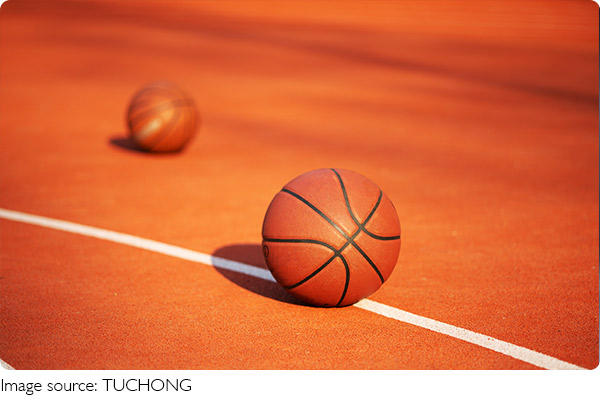
So, Lykkers, the next time you hold a basketball, take a closer look at those familiar lines—you'll see that every groove tells a story of thoughtful engineering that helps make the game possible.