Pick Better Bathroom Tiles!

Owen Murphy
| 26-08-2026
 · Lifestyle Team
Bathroom floors can become slippery when water covers a smooth surface, making tile selection an important part of planning a wet area.
Porcelain, natural stone, mosaic, and pebble tiles can suit wet areas when their surface finish and slip-resistance characteristics match the location.
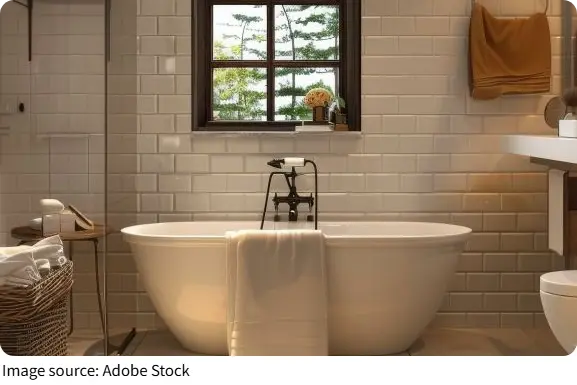
Check Slip Resistance Before Choosing
Slip resistance describes how well a flooring surface resists slipping. It can be assessed using the coefficient of friction, including static coefficient of friction for surfaces at rest and dynamic coefficient of friction for surfaces during movement. For floor tiles, wet-condition performance matters because water changes how the surface behaves underfoot.
A tile with a matte or textured finish generally provides more traction than a smooth, polished surface. When comparing products, check the manufacturer's technical specifications for the intended floor application rather than judging the tile by appearance alone.
Consider Porcelain, Natural Stone, and Mosaic Tiles
Porcelain is a practical option for bathroom floors because porcelain tiles have a water absorption rate below 0.5%. Their dense, nonporous construction suits areas exposed to moisture, while matte and textured finishes can improve traction. Natural stone is another option. Marble is one example included among natural stone tiles suitable for indoor or outdoor applications.
The surface finish still matters, so a stone tile intended for a wet floor should be selected according to its slip-resistance characteristics. Mosaic tiles are particularly useful on shower floors. Their smaller pieces create more grout lines across the floor, which can provide additional contact points underfoot while also helping the surface follow the slope of a shower floor.
Match the Tile to the Wet Area
The location should influence the tile format and surface.
Shower floors: Mosaic or pebble tiles are suitable choices because their smaller pieces create more grout lines.
Bathroom floors: Porcelain or natural stone tiles can provide suitable options when the surface has appropriate slip resistance.
Frequently wet areas: Give extra attention to the tile's texture, finish, and wet-condition specifications before installation.
A common mistake is choosing a polished tile because it looks attractive without considering how the surface behaves when wet. Smooth, glossy finishes can become slippery in wet conditions, while matte finishes are generally more appropriate where additional traction is needed.
Plan Installation and Cleaning Carefully
Proper installation affects the long-term performance of bathroom flooring. The tile needs to be installed correctly for the floor to remain functional and durable over time, particularly in areas where water regularly reaches the surface. Cleaning also requires attention to the tile finish. Avoid harsh chemicals when cleaning non-slip bathroom floors, and follow the care instructions provided for the specific tile.
For an immediate improvement in the selection process, compare two or three tiles side by side and check their finish, water absorption information, slip-resistance specifications, and recommended application before making a purchase. This is especially useful when choosing between tiles that have similar colors or patterns but different surface textures.
The safest choice starts with matching the tile's slip-resistance characteristics to the area where it will be installed. Check the specifications, favor suitable matte or textured surfaces for wet floors, and select smaller mosaic or pebble formats when appropriate for shower flooring.