Depth With Foreground

Lucas Schneider
| 08-09-2026
 · Art Team
Hello, everyone. You probably know the feeling: you stand at a gorgeous overlook, snap a frame, and later the photo looks totally flat, like a postcard with no depth.
The usual fix people try is a wide lens or a tiny aperture, but that is not what actually creates the sense of space. What changes everything is having something close to you in the frame, a foreground element that gives the eye a starting point to travel from.
Why close objects change everything
Your eye reads depth by comparing near and far. When you include a rock, a bush, or a railing just a few feet from your lens, the brain instantly measures the distance between that object and the distant horizon. Without that near anchor, the whole scene compresses into a single flat layer. This is why a photo of a mountain range alone rarely feels grand, but the same range with a few wildflowers in the bottom corner suddenly feels vast. Next time you shoot a landscape, look down before you look out.
Leading lines do the heavy lifting
Foreground elements work even harder when they form lines that point toward your subject. A wooden dock stretching into a lake, a cracked dirt path through a field, or a row of fence posts receding into the distance all pull the viewer's gaze forward. The trick is to place the line so it enters from a lower corner and angles toward the middle or upper third of the frame. I shot a harbor scene once where the only foreground was a thick rope coiled on the pier, and it curved naturally toward the boats. That single rope made the whole image feel three-dimensional.
Scale gives the viewer a reference
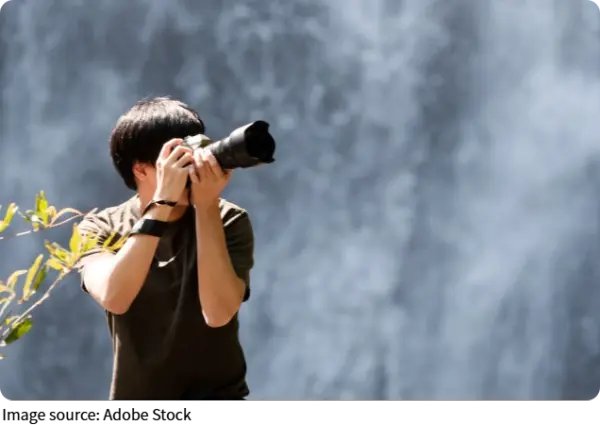
A foreground object also tells the viewer how big everything else is. A lone hiker standing on a ridge, a small boat bobbing near a cliff, even a bicycle leaning against a wall in an alley scene, these provide a human scale that makes distant mountains or buildings feel properly massive. Without that reference, a 5,000-foot peak and a 500-foot hill look identical in a photo. You do not need a person, either. A familiar object like a car mirror, a coffee cup on a table, or a pair of shoes works just as well because the viewer already knows its size.
Framing adds another layer of space
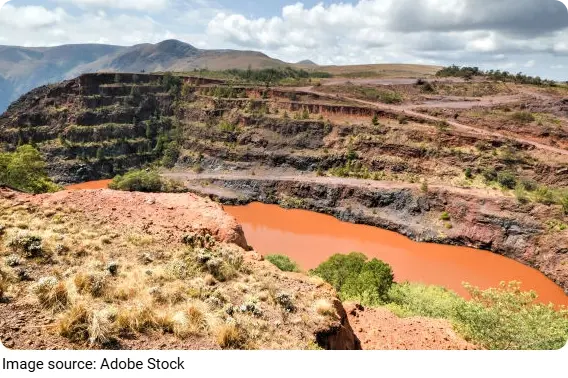
You can also use foreground elements to physically frame the scene, which creates depth almost automatically. Branches arching over a trail, a cave opening, a window frame, or the gap between two boulders all act as a border that pushes the subject backward. This works especially well when the framing element is darker than the scene beyond it, because the contrast separates the layers. Try shooting through a doorway in an old building and aim at a busy street outside. The dark arch becomes the first layer, the street the second, and any building behind it becomes the third.
Focus sharp or soft, your choice
You have two solid options for handling focus with foreground elements. The classic landscape approach is a narrow aperture like f/11 or f/16, which keeps both the foreground rock and the distant peak sharp. But you can also shoot wide open at f/2.8 and let the foreground blur into a soft shape. That blurred shape still anchors depth because the eye recognizes it as something close, even out of focus. I have used both on the same trail, and the blurry version often feels more intimate while the sharp version feels more documentary. Try both and see which matches the mood you want.
A practical tip before you head out: get lower. Most people shoot from standing height, which puts the foreground far away and small. Crouch down, kneel, or even lie on the ground, and that same patch of grass or gravel becomes a large, commanding presence in the lower third of your frame. You will immediately notice the difference in how much space the photo suggests.
So next time you frame a shot, do not just point at the main subject. Look for something within arm's reach, a stone, a leaf, a piece of fence, and let it lead the way into the scene. That is the simplest change you can make to give your photos real room to breathe.